Monday, April 4, 2011

Breathless in Arequipa


The airplane we took from Lima to Arequipa let us out directly onto the tarmac. Straight in front of us was the Arequipa International Airport, a little building with a single luggage belt and a shabby collection of kiosks touting local hotels and tours of nearby Colca Canyon. It's provincial and, particularly given that Arequipa is Peru's second-largest city, singularly unimpressive.

That is, until you turn around and see the hulking snow-capped mountains - including El Misti, an active volcano - right behind the plane, imposing and majestic and completely out-of-sync with the airport's dreary functionality. Cognitive dissonance, as it turns out, is kind of Arequipa's signature. Bach's Toccata and Fugue weaves through the streets of the colonial old town - the same three bars, over and over. It wasn't until the third time or so that we heard it that we realized it was blasting from the garbage trucks.

Dad and I were met outside the airport by a driver sent by our hotel, who led us to a rickety Daewoo with a sticker across the front windshield that said THE UNDERTAKER. Fortunately, it didn't prove prophetic, as the most exciting thing that happened on our drive was passing several flocks of sheep, attended by people in traditional Andean garb, along the median of the highway that led into town.

When we got to our hotel - La Casa de Melgar, a converted bishop's residence with courtyard after courtyard, all built from the city's legendary white stone and filled with gorgeous flowers - Dad and I dropped our stuff. We then wandered around the white-stone city for an hour or two before I retreated back to our room to rest. The elevation has totally wiped me out, although at some 2,500 meters, this is the closest to sea level I'll be for the next month, so I'd best be getting used to it.
Published with Blogger-droid v1.6.8

Sunday, April 3, 2011

Bogota, Round Two

A tiny corner of the dance floor at Andres Carne de Res
On Molly and Doyle's last night in Colombia, we went to Andres Carne de Res, a club in a suburb of Bogota advertised as Colombia's best.  It's about an hour's drive from the city center, which we did in a 'party bus' - really, a reappropriated school van pumping a bizarre mix of dance tunes and Hoobastank, filled about 10 people past capacity with travelers living up to their respective cultural stereotypes. (Boisterously drunk Irish, belligerently drunk Australians, sloppily drunk Americans.)

Half steakhouse, half dance club, Andres Carne de Res is in a sprawling building packed with crazy floor-to-ceiling decorations out of one of Dali's gnarlier acid trips. Headless mannequins covered in mosaics of mirrored tiles, a life-sized stuffed tiger jumping through a lighted hoop, signs that say things like Ojos Asi en los Ray Ban ("Keep your eyes on my Ray Bans") and Aqui Rumbean los Astronautas ("This is where the astronauts party").  It basically looks like the house of the hoarder with some artist friends and a great sense of humor.
A random photo of the decor

We made friends on the sardine-tin crowded central dance floor with a guy named Alfred, whose assurances that he wasn't drunk became less convincing every time he repeated them.  He was there that night to celebrate his younger sister's 23rd birthday, and carried a bottle of tequila with him that he passed around freely.  We each took a shot, chased with slices of orange and lime that were provided in little coconut-shell bowls lying around the bar, presumably for that purpose, and danced for hours to an eclectic mix of salsa, reggaeton, and the unescapable Black Eyed Peas.  At one point, we took a break out back, sitting for a minute on the curb of a blocked-off street that was filled for the evening with makeshift drink booths and carts selling choripan.  As we watched drunk girls stumble outside for some fresh air, a brass band appeared out of nowhere, complete with dancers costumed as various vaguely religious figures tossing confetti into the crowd.

It's easy to forget amidst so much joyful debauchery that Colombia's civil war isn't over, but rather just pushed to the remotest fringes of the countryside. But a couple of days after Molly and Doyle left, I was wandering around the city with a friend I made at the hostel, and we stumbled into "Las Colores de la Montana," a movie centered around a little boy named Manuel, who watches as his friends' families and then his own are accused of being guerrillas and then killed or made to flee the town where they all live.  It was sweet and sad and chilling, as I really hadn't thought before seeing it about the cost of the relative peace that's made Colombia into a trendy tourist destination.  

That said, I really loved Colombia.  I'm starting to realize how little time I have to travel - I'm barely getting to scratch the surface of the countries I'm visiting.  I'm already planning my trip back.


Wednesday, March 30, 2011

Adventures with Ron

Coconut rice is my new favorite food
Cartagena is a tourist's town, a sort of real-life Disney World where the only way to pay a reasonable price for something is to laugh at the first quote and then offer something less than half, whether it's for a boat ride or a streetside soda.  That said, if you know where to look, you can pay less that $3 USD for a feast of fish soup, coconut rice, salad, patacones (fried savory plantains) and a whole fried fish, which we basically ate two meals a day.

On our third day in Cartagena, Molly, Doyle and I left the city to go to Playa Blanca, an isolated beach on the nearby island of Barú.  When we made it to the marina, at 10:30 in the morning, all of the official boats to the island had already left.  Molly went up to a ticket window and asked if there was any way to get there before the following day.

"Legally?" the ticket woman said.  "No.  But you can go illegally."

So we did.  We found a man waiting for tourists in just such a situation who promised to get us to Playa Blanca in his uncle Eliezer's fishing boat.  First, though, we had to go to the island town of Bocachica to get around paying a port tax.  The man herded us into a water taxi, where we waited for at least a half-hour as it filled up way past any reasonable capacity with locals returning home with shopping bags full of groceries, ice creams, and in one case, a desktop computer. 

Cartagena's colonial Old Town
The taxi took us past where the brown water surrounding Cartagena turned cotton-candy blue, past shantytowns where pigs picked through garbage-strewn yards, past stone-wall fortifications left over from when the Carribbean was a pirate-infested battleground.  At the last stop, Eliezer greeted us at the dock and took the money we'd refused to hand over on the mainland, and then led us to the second boat, a rickety little motorboat captained by a mute fisherman who turned over his cutting board to make a seat for Molly and Doyle. 

The ride from Bocachica to Playa Blanca sorely tested the integrity of the little boat's hull, but blessedly we never quite lost sight of land.  Finally, we turned a corner and the Playa appeared.

The beach is narrow, as evidenced in the picture, and lined with various thatch-roof restaurants and campgrounds where you can rent a not-particularly-comfortable hammock for 7,000 COP per night.  We found some friends from our hostel in Cartagena, rented hammocks where they were staying, and jumped in the water, which was salty and warm and perfect for swimming.

This paradise is the reason all of my pictures are stock photos
The next two days were filled with a lot of doing nothing.  Drinking the bottle of ron we brought from the mainland, mixed with warm Coke or fresh tropical juices; snorkeling; haggling for more meals of fish and rice than I care to remember; eating the best mangoes in the world, sold to us by a toothless local who earned the name Mango Mama and who underestimated our Spanish enough that she bragged to a friend how much money she had made off of us while we sat there and listened.  I let myself get lulled into the carefree island mindset and got my camera stolen, the nice one with all my pictures on it, so I'm now dependent on my companions for all photos and my dear readers are stuck with pictures I've stolen from elsewhere on the internet for a little bit longer.

My sunburn is fading into an itchy tan, the last of the sand is gone from my ears, and I'm glad to be back in Bogotá, this rainy mountain city that feels like it's someone's home.  For all of Cartagena's beauty, natural and architectural, it lacks a sense that real people live there.

Monday, March 28, 2011

The Mission Comes to Bogotá

On one of our first nights in Bogotá, Molly and I went to a concert with a guy we met at our hostel.  The show was supposed to start at 9, but when we got there at 10:30, I felt like we had stumbled into the living room of someone much cooler than me. 

The front room of Matik Matik, minus the Colombian hipsters
The front room of the club, Matik Matik, was brightly lit and decorated with a legless piano,  three massive silkscreens of Chairman Mao, and a bookshelf filled with well-worn Colombian children's books.  The other patrons in the bar were dressed like they had just walked out of the Latin American Club and into Latin America - girls in short vintage dresses or leather jackets, boys in thick-rimmed glasses and too-tight pants.  They looked at us with suspicion when we walked in and then went back to drinking their weak cerveza Poker or children's Tylenol-flavored vodka (sold under the name Yo Me Mato, or, "I'm Going to Kill Myself").

Sometime past 11, a curtain at the back of the room was pulled aside and we were ushered into the back room.  The band bounded out - three girls in mercilessly teased wigs, ripped neon tights, and sparkly Spandex, who I later learned went by the name La Borracha Y Los Cliches Sociales - "The Drunk Girl and the Social Cliches."  Backed by a tiny curly-haired man in a nylon ski jacket and shiny purple leggings, they yelled tuneless, Peaches-style lyrics about their coños while Scandinavian dance music played in the background.

After the concert, the music kept going and the band came out to join the crowd.  I found one of the girls - the one who had been introduced as "La Borracha" - and congratulated her.  Before I knew it, we were being introduced to everyone, and the crowd that had been so intimidating when we first walked in was suddenly filled with our new best friends.  With the exception of a quick break for empanadas around the corner, served to us through the slats of a thick steel fence, we danced with them until Matik Matik started to wind down sometime close to 3 am.

That was an early introduction to a country that feels not unlike home, but with friendlier people and more dancing.  Everyone is eager to show off a country almost as new to them as it is to the tourists who have just recently started to pour in, the freshness of past violence evident in the sheer giddiness Colombians seem to feel at its sudden absence as much as it's evident in the country's unofficial tagline - "Colombia - The Only Danger is Not Wanting to Leave!" 

Wednesday, March 16, 2011

Spangligese

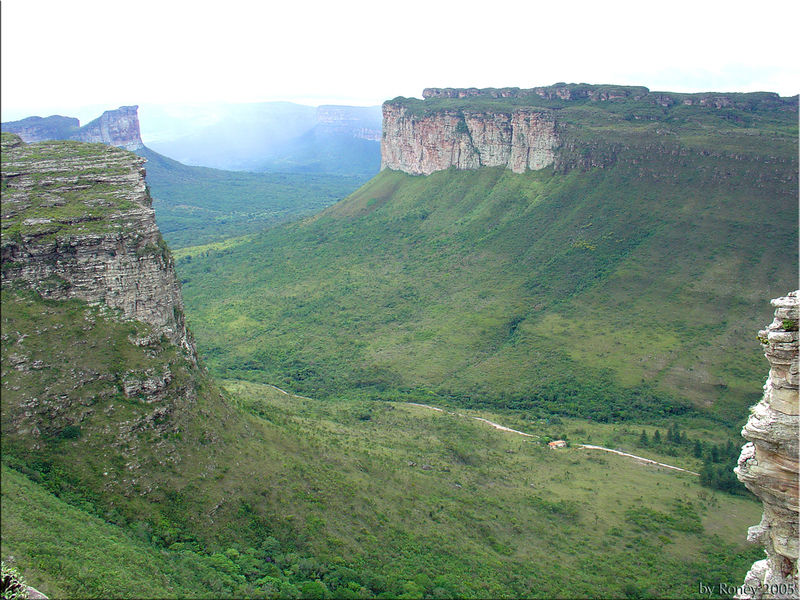
One of the many valleys in the Chapada.  I have no idea if it's one I actually saw, but it could have been...
 
I left Brazil at 5:00 yesterday morning.  Post-Carnaval, Dan and I went east from Salvador to a town called Lencois, which is near the Parque Nacional Chapada Diamantina.  I haven't figured out a way to upload my pictures onto the hostel computers I've been using, which makes it almost impossible to convey how beautiful Chapada Diamatina is, but borrowing strangers' pictures might help.  (I hope to replace these pictures with my own as soon as I can upload them, but these ones get the idea across.)

That sand is actually tiny spiral seashells!
The first day in Lencois we hiked around the town itself and hit four different swimming holes, all of which came with attached waterfalls.  I went swimming in all of them and ended up with a pattern of sunburn streaks and swirls that came close to mimicing the sunset we watched the following night from the top of a giant rock outcropping. There are no real marked paths through the jungle, so we hired a guide, Yuri, who in addition to showing us around regaled us with pickup lines he'd learned from Ludacris songs.  ("Damn, girl, I really dig your lips!" was a particularly ineffective one.)  The second day we took a highlights-reel bus tour of the Chapada Diamantina's main attractions - massive caves with what our guide called "stalactits and stalagmeats," glass-clear ponds lined with microscopic seashells, and monkeys.

One of the more deserted stretches of beach
Our last few days we spent in Arraial d'Ajuda, a beach town where the elite go to look pretty.  It was almost impossible to get to (a bus to nearby Porto Seguro, another bus to the ferry to Arraial, the ferry across a narrow channel, a third bus to the Arraial town center, and then a taxi to our hotel) but worth it - thick "Lost World"-style jungle butting up on beaches with water the color of a blue rasperry popsicle.  The crowds, as always happens even in the most pristine places, clustered around the beachside restaurants serving beer and pizza.  Dan and I walked way past them, almost to neighboring Trancoso, and totally misjudged the sunset, as is becoming my trademark.  It turns out things clear out pretty fast after dark.

Brazil was, as my CouchSurfing host Bruno would make fun of me for saying, awesome.  (Apparently I say it a lot?)  That said, I'm kind of relieved to be in Colombia, if only for the language.  I don't speak Portuguese.  Like, not at all.  I developed this bizarre patois in which I would say the first word of my sentence in Portuguese and then finish in Spanish ("Onde está el supermercado?").  It was semi-effective at getting a response - except the response was invariably in rapid-fire Portuguese, which meant it was functionally useless.  Dan does speak some Portuguese, so we were fine while he was there (with the exception of a incident at the bus station in Rio, in which I tried to convey to the window attendant that we were flying to Salvador by flapping my arms and sort of making weird noises, doing nothing but make both him and Dan almost die of embarrassment), but once he left I was basically a deaf-mute.  That said, I had the biggest triumph of my trip so far in Porto Seguro, where I managed to track down a lock, a power converter, and an alarm clock in the main commercial district by, basically, going into every store that looked like it might have hardware or electronics, looking helpless, and pointing at my wrist a lot.  The joys of traveling can be unexpected.

Saturday, March 12, 2011

A Tale of Two Carnavals

On my last night in Rio, I told a girl at a party that I was heading to Salvador for their Carnaval celebration the next day.

`'You´re going to Salvador?" she said.  "Are you mentally and emotionally prepared for that?"

I was taken aback.  "I think so," I said.  "I mean, I´ve been in Rio for the last three days, and it´s pretty crazy here.  Are you saying it´s going to be crazier there?"


A carnaval crowd along Ipanema beach in Rio
 "Just wait," the girl said.  "Salvador is like Rio, times 100."

She was right, kind of.  If Rio´s Carnaval was like Myrtle beach week on steroids, then Salvador´s was like Myrtle on a crazy acid trip.  They were both insane, exuberant parties, and I´m still in recovery.

In Rio, Dan and I didn´t have tickets to the parade at the Sambodromo, which cost upwards of a hundred dollars and sell out months in advance of Carnaval.  The stereotypical images of women in gold bikinis with feather headdresses are all from that main parade.  Instead, we went to blocos (like the one at right), which are smaller street parties that take over the entire neighborhoods of Copacabana, Ipanema, and Leblon.  "Smaller," of course, being a relative term - the streets are packed from about 5 pm onwards with thousands and thousands of people in costumes (men in wigs and bustiers, girls in bikinis and sailor caps), drinking beer from cans sold on the street, sometimes dancing to music from bands playing atop big buses parked in the middle of the street.  It was, in a lot of ways, like your stereotypical college spring break on a much larger scale.  The part that made it really great were the people we met there, including our lifesaving CouchSurfing host and the girl who hosted the house party we went to on our last night in Rio.

Salvador, on the other hand, was like nothing I´d ever seen - a joyful mess of people and street decoration and confetti and drumming, all set among beautiful rainbow-colored colonial houses. During Carnaval, the touristy colonial old town, called the Pelourinho, is packed full with families dancing, caipirinha stands, and percussion groups that wander the streets dressed in exotic costumes or matching t-shirts.  Our first night there, Dan and I ended up following an Asian-Brazilian drumming team wearing mud-colored face paint up and down cobblestone streets for what must have been an hour and a half, dancing with the crowd as it waxed and waned.  The energy of the crowd was awesome, and exhausting.  Our second night there we just sat at a sidewalk cafe for hours as the party raged around us, pausing our conversation as various drum groups passed us and drowned out all other sound.  I was definitely ready to leave by the time we headed to the small town of Lencois, but it was one of the most incredible things I´ve ever been in the middle of.

I´ll add my own pictures when I get a chance to upload them, as it´s really hard to convey the scene in a couple of paragraphs.  I´m grabbing internet wherever I can.  More on the rest of Brazil later!

Sunday, February 27, 2011

My Itinerary, More or Less

I'm leaving on Tuesday (I hope - more on that later) for two-and-a-half months of backpacking through South America. I'm currently trying to pack for a trip that's going to involve temperatures as high as 100 (in Cartagena, Colombia) and as low as 0 degrees F (in Uyuni, Bolivia). I have no fewer than seven bottles of various anti-everything medications (anti-malaria, anti-typhoid, anti-altitude sickness, antibiotics...), three kinds of sunscreen with a combined SPF of around 750, a three-dollar copy of The Brothers Karamazov, and a single pair of jeans.

I also, thanks to the Bolivian government, have no passport, as it is currently in Los Angeles getting a visa sticker. The visa company has sworn up and down I'll have it back by tomorrow. If not, I may be a couple of days late for Carnival. The ECs* have already begun.

My itinerary, insofar as it exists, is as follows:

March 1-15: Brazil
  • Rio de Janeiro, Salvador, and Porto Seguro
March 15-31: Colombia
  • Bogota, Cartagena, and maybe Medellín
April 1-9: Peru
  • Lima, Arequipa, and Titicaca
April 9-17: Bolivia
  • La Paz and Uyuni
This is the part that's pretty much set. I have plane tickets, hostel reservations, and travel companions through Bolivia. After that I'm on my own, and my plans pretty much stop. I'll somehow have to make my way down to Buenos Aires in time to leave on May 18, but I'm keeping my options open with regards to how that actually happens. I plan to blog and post pictures pretty regularly, but I'm not going to have a computer with me, so I'll be depending on whatever internet I can find along the way.

*Experiencia Cultural - see post from April 13, 2008 for more on the genesis of the EC. I sense it's probably going to come up again.